Historic Coffee Houses That Shaped the World

Updated: Apr 22
Where Ideas Were Brewed: Inside the cafés that quietly shaped revolutions, literature, and modern thought
By Maheshwari Vickyraj
What Were Historic Coffee Houses and Why Did They Matter?

Step into a historic café and the atmosphere feels immediately different.
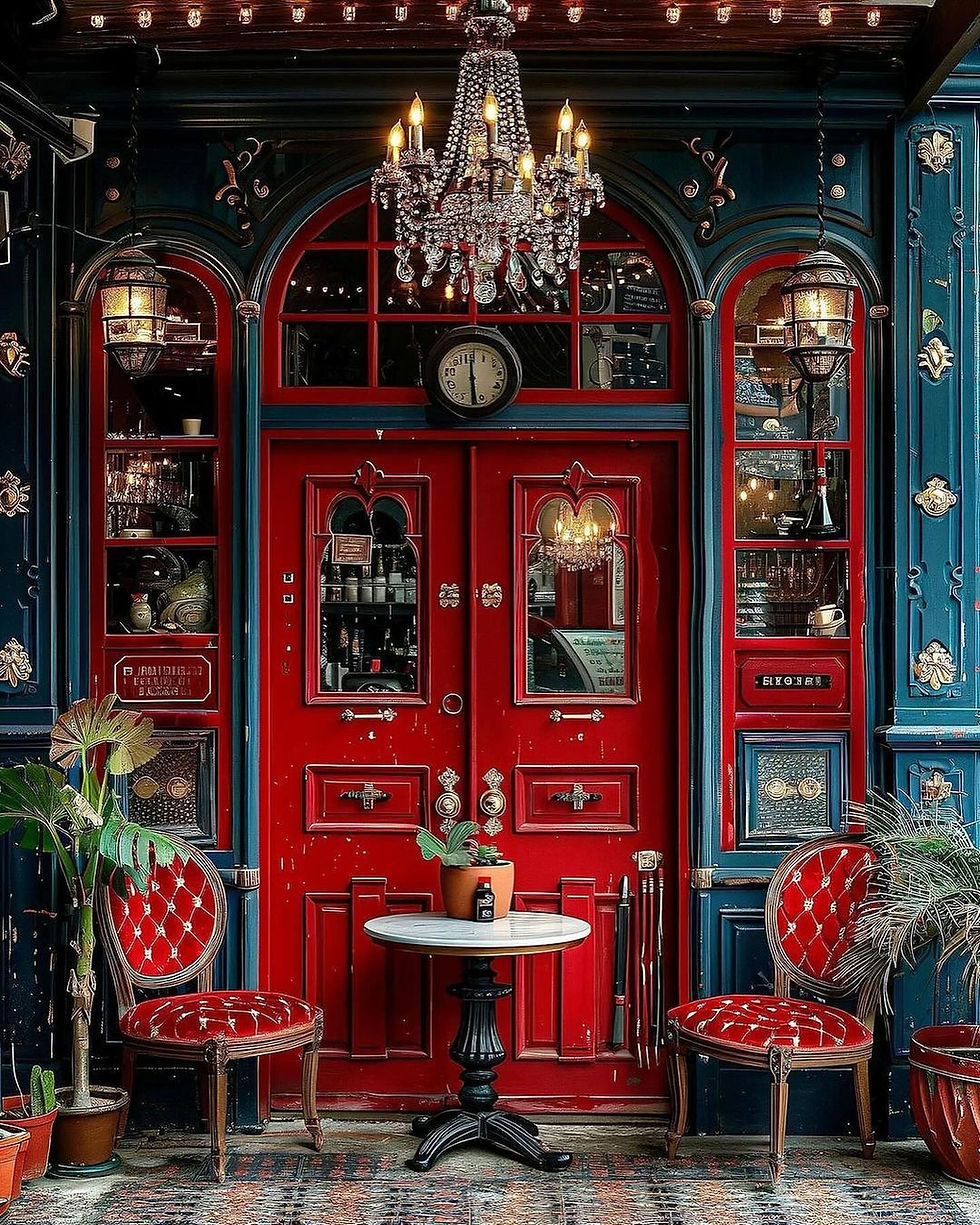
Light falls gently across marble tables polished by decades of conversation. Mirrors multiply the room into quiet infinity, while chandeliers cast a warm glow over bentwood chairs and newspapers folded beside porcelain cups. These interiors feel theatrical, almost cinematic. However, their real significance lies not in decoration but in what once unfolded within them.
Long before podcasts, newsletters, or social media debates, historic coffee houses served as cultural salons where thinkers gathered to exchange ideas. In fact, for centuries these spaces functioned as informal academies where philosophy, literature, and politics were debated openly.
Today we romanticise historic cafés as charming relics of another era yet in context, they were once something far more radical. They were the social infrastructure of intellectual life.
The Rise of Coffee Houses as Cultural Salons

The European coffee house began as a curiosity. Coffee arrived from the Ottoman world during the seventeenth century and quickly became fashionable among merchants and scholars. However, the drink’s true influence emerged through the spaces built around it.
Coffee houses soon evolved into gathering places where people discussed science, commerce, literature, and politics.
In an article by History.com, it is noted that many cafés became known as “penny universities” because for the price of a cup of coffee, customers could gain access to intellectual discussion and sober debate.
This phrase captured something essential about the coffee house. Universities at the time were exclusive institutions reserved for the elite. However, cafés offered a far more democratic environment. Anyone who could afford a cup of coffee could sit, listen, and participate in conversation.
Besides providing caffeine, the café offered something even more valuable: intellectual access.
How Coffee Houses Influenced Revolutions and the Enlightenment

Because these cafés encouraged debate, they quickly became centres of political thought.
In fact, authorities sometimes viewed them with suspicion. The same History.com article explains that King Charles II attempted to suppress London coffee houses in 1675 because officials feared they were places where citizens criticised government policy and exchanged controversial ideas. However, the ban lasted only eleven days before being reversed.
Similarly, in an article published by Smithsonian Magazine, it is observed that coffee houses in colonial America “served up more than just hot drinks. They acted as intellectual hubs and meeting places for dissenters.”
In context, these historic coffee houses played a significant role in shaping Enlightenment thinking. They created environments where ideas about liberty, governance, and reason could be discussed openly. Besides, they allowed these ideas to circulate across classes, making intellectual discourse more accessible than ever before.
Famous Historic Cafés in Europe That Defined Culture

Across Europe and beyond, certain cafés became synonymous with cultural life however, to truly understand their legacy, one must experience them not just as places, but as atmospheres. Each café carries its own rhythm, its own rituals, and its own quiet language of detail.
Café Procope, Paris
Founded in 1686, Café Procope became a gathering place for Enlightenment thinkers such as Voltaire and Rousseau. It was here that intellectual debate blended seamlessly with social ritual, shaping the philosophical climate of Paris.
Caffè Florian, Venice
Opened in 1720, Caffè Florian remains one of the oldest continuously operating cafés in the world. Its ornate interiors reflect the grandeur of Venice while preserving its role as a social and cultural meeting place.
Café Tortoni, Buenos Aires
Established in 1858, Café Tortoni became a centre for artistic and literary life in Argentina. Poets, musicians, and thinkers gathered here, embedding the café into the cultural fabric of Buenos Aires.
Why Writers and Thinkers Worked in Coffee Houses

For writers, cafés offered a unique balance between solitude and community.
The quiet background of conversation provided energy without distraction. Many authors discovered that ideas flowed more easily in these environments than in isolation.
Journalist Michael Pollan reflects on this cultural shift, noting that coffee “ushered in a shift in the mental weather, sharpening minds that had been fogged by alcohol.”
In other words, coffee houses helped redefine intellectual life instead of the slower, alcohol-driven culture of taverns, cafés encouraged alertness, clarity, and sustained dialogue.
The Architecture of Historic Cafés

The intellectual importance of cafés cannot be separated from their design unlike contemporary coffee chains built for efficiency, historic cafés were constructed as spaces for lingering. Interiors were richly layered with marble, brass, mirrors, and wood, creating environments that felt both intimate and expansive.
Besides creating beauty, this architecture encouraged interaction. Tables were arranged to invite proximity, newspapers circulated freely, and the room itself became a stage for observation.
In this sense, the historic café functioned as an analogue network long before the digital age.
From Historic Coffee Houses to Modern Cafés

However, café culture has shifted significantly. Modern coffee shops prioritise speed, efficiency, and individual work. Customers often arrive with laptops and headphones, engaging more with screens than with each other.
Besides, digital platforms now perform many of the functions once associated with cafés. Podcasts host debates, social media spreads ideas instantly, and newsletters deliver commentary directly to readers.
Yet something has been lost in translation.
Why We Still Romanticise Historic Café Culture

Despite these changes, the emotional pull of historic cafés remains strong.
When people visit places such as Vienna’s Café Central or Paris’s Café de Flore, they are not simply seeking coffee. They are searching for a certain atmosphere. A slower rhythm. A sense of intellectual intimacy.
In fact, the enduring appeal of these cafés lies in what they represent: a world where conversation mattered, where ideas unfolded gradually, and where time itself felt more generous.
What Does This Tell Us?

Historic coffeehouses remind us that ideas rarely emerge in isolation, instead are shaped by environment, by dialogue, and by the subtle presence of others. The café created a space where creativity could unfold organically.
Besides, these interiors reveal how design influences behaviour. Beautiful spaces encourage people to linger, and lingering creates the conditions for thought.
In a culture defined by speed, the coffeehouse offers a different sensibility. One rooted in patience, presence, and the quiet power of shared conversation.
The next time you step into an old café, pause before lifting your cup.
Notice the marble tables, the mirrored walls, the soft glow of light across the room. Imagine the conversations that once took place there. Philosophers argued, writers drafted, and revolutions began not with noise but with dialogue.
In fact, the modern world was shaped in rooms like these.
All it took was coffee, curiosity, and a table where ideas could gather.