What Is a Gossip Bench? The Forgotten Piece of Furniture That Deserves a Place in Every Home

Before the smartphone, before the cordless phone, before call waiting, there was a piece of furniture built specifically for the act of conversation. It had a seat, a shelf, and a drawer for the phone book. It was called the gossip bench. And it is having a moment.
By Maheshwari Vickyraj
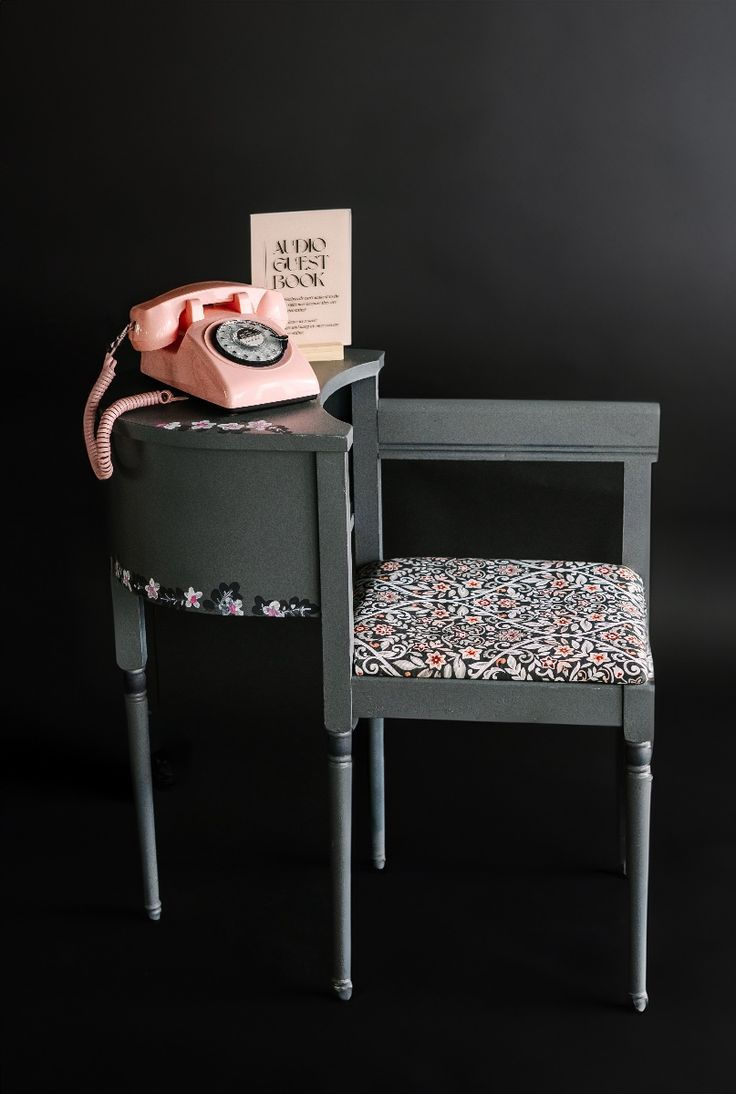
There is a particular kind of object that only makes sense once you understand the life it was built around. The gossip bench is one of them.
A compact piece of mid-century furniture, it combines a chair with an attached side table, sometimes with a small drawer or shelf beneath, designed for one specific and now vanished domestic activity: sitting down to use the telephone. Not pacing. Not multitasking. Sitting. Staying. Talking, fully, for as long as the conversation required.
The gossip bench did not just hold the telephone. It held the idea that a phone call was worth furniture.
What Is a Gossip Bench and Where Did It Come From?

The gossip bench, sometimes known as the telephone table, was created as a direct result of the invention of the telephone and its subsequent adoption into daily life, according to Back Then History. Early telephones were cumbersome and stationary. They lived in hallways and living rooms, permanently fixed, and the person using them had to stand or drag a chair across the room. The gossip bench solved both problems at once: it gave the telephone a home and the caller a seat.
Most gossip benches were at their most popular between the 1930s and the 1950s. They featured a small table surface for the telephone and a lamp, a seat wide enough for a long conversation, and a storage drawer or cubby for the telephone directory. Since the directory was large, not easily moved, and entirely necessary for placing a call, having it tucked neatly beneath the seat was a detail of genuine domestic intelligence.
The name is not incidental, As Apartment Therapy noted, these were the benches where teenagers called their first crushes, where neighbours exchanged morning news, where the act of talking to someone at a distance was considered a sufficient occupation for an entire piece of upholstery. The gossip bench was infrastructure for intimacy at a time when intimacy had a fixed address.
Why the Gossip Bench Is Returning Now

The gossip bench is back, and the reason is not purely aesthetic, though the aesthetic is considerable.
The return to analogue living is officially one of 2026's biggest cultural shifts, according to Vogue Adria, driven by a desire for a slow-paced lifestyle where the physical takes higher precedence over the digital. The gossip bench sits squarely within that desire, it's an analogue object in the most literal sense: a piece of furniture designed around a single, unhurried activity, with no screen, no notification, no algorithm determining how long the conversation should last.
It belongs in the same conversation as the vinyl revival and the film camera renaissance. As Fstoppers noted in their 2026 analysis of the analogue photography movement, people are reaching for tools that cannot optimise them. The gossip bench cannot optimise you. It can only invite you to sit down and talk.

There is also the interior design argument. Apartment Therapy observed that the gossip bench is compact in footprint yet manages to offer a tabletop surface and a bit of extra storage underneath, making it a genuinely smart small-space solution. In the era of the curated shelf and the considered interior, a gossip bench also functions as a conversation starter: anyone who sees it always asks what it is.
What the Gossip Bench Tells Us About How We Used to Live

The gossip bench is interesting not just as an object but as evidence.
It tells us that there was a time when a phone call was stationary enough to require its own furniture. When conversation was not something squeezed between tasks but something you prepared a place for. When talking to someone, even at a distance, was considered a sufficient occupation for an entire afternoon.
That world is very far from the one where most of us walk around a room while on a call, eat lunch during a video meeting, and treat conversation as a background activity conducted in parallel with something else. The gossip bench, sitting quietly in a hallway or a corner, is a mild rebuke to all of that. Not a lecture. Just a question: what would it mean to sit down for this?
This connects to the broader cultural recalibration documented in the conversations around soft socializing, doorbell friends, and the analogue era. Each of them is asking a version of the same thing: what did presence feel like before it required a phone-free pledge or a digital detox retreat? The gossip bench remembers. It was built around it.
How to Use a Gossip Bench in a Modern Home

The gossip bench does not need a rotary telephone to earn its place. What it needs is a corner, an intention, and a willingness to let a piece of furniture do something furniture has not been asked to do for several decades: slow you down.
In an entryway, it works as a landing spot, a place to sit when you arrive home, put your bag down, and transition out of the day before the evening begins. In a study or bedroom corner, it becomes a reading nook with a surface for a lamp and a stack of books. In a living room, it is the kind of object that makes a room feel considered rather than assembled.
At its most considered, the gossip bench is a domestic argument for the kind of home explored across the Design and Spaces with Soul sections of this publication: one where objects carry meaning, where the choice of what to put in a room is also a choice about how to live in it.
A home that remembers what your body already knows. That sitting down changes the quality of a conversation. That furniture built for slowness is, in a house running at the pace most houses currently run at, one of the most quietly radical things you can bring through the door.

