Grandma's Knickknacks Are Back: Why Grandma Chic Is the Interior Design Trend Defining 2026

Floral wallpaper. Pleated lampshades. Cabinets filled with curious little objects collected across decades. Grandma chic is the interior design trend redefining 2026 not as nostalgia, but as a quiet rebellion against homes that look styled instead of lived in.
By Maheshwari vickyraj

There is a particular quality to a home that has been lived in rather than assembled. You feel it before you can name it. Something in the layering of patterns, the objects that clearly arrived across decades rather than in a single shopping trip, the sense that every surface has a reason for being exactly as it is even if that reason is purely sentimental.
That quality has a name now and it belongs to your grandmother!
Grandma chic, also known as grandmacore, is the interior design movement that has moved from a niche aesthetic to one of the defining design conversations of 2026.
What Is Grandma Chic and Why Is It Having a Moment?

Grandma chic is a home decor aesthetic that draws from the layered, eclectic, deeply personal interiors of previous generations. It combines vintage furniture, floral patterns, handmade textiles, collected objects, and an unapologetic disregard for the idea that a home should look like a showroom.
Country Living spoke with 100 designers, all part of their Country Design 100 list, to identify the biggest trends heading into 2026. Whimsy came out on top, and grandma chic was at its heart.
Designer Christina Salway was direct: "Let 2026 be the year we release our grip a little. Let's have some fun."
Shea McGee, another Country Design 100 honouree, described what that fun looks like in practice: "Think ruffles, pleats, and fringe layered into cozy textiles and soft furnishings."

Designer Katie Kiser of Katie Kiser and Co. put the philosophy plainly in her interview with Homes and Gardens: "For some of us, whimsy is not a trend but a way of life." She added, with a precision that feels entirely right: "You simply cannot walk into a yellow breakfast room and have a bad day."
Why Grandma Chic Is Rising Now

The timing makes sense when you consider what grandma chic is reacting against.
The bouclé-laden minimalism that defined the mid-to-late 2010s gave way to quiet luxury, which gave way to an increasing awareness that the stripped-back, everything-beige, nothing-on-the-surfaces aesthetic, while beautiful in a photograph, is exhausting to actually live inside. As Country Living's trend report noted, people are finally letting their homes be wonderfully weird.
The rise of grandma chic also coincides with a growing rejection of overconsumption and disposable design. Fast furniture, the interior design cousin of fast fashion, has long dominated the market, offering inexpensive, trendy pieces that often prioritise appearance over quality. Clients and designers alike are now placing character and longevity at the forefront of design decisions.
Pinterest named Funhaus interiors one of its big trends for 2026, focusing on colourful accents including stripes, checks, and scallops. The platform's data confirmed that searches for terms like "how to add more whimsy to your life" and "year of whimsy" had skyrocketed since the start of 2026. The algorithm, which usually leads us toward the flat and the frictionless, is reflecting back a genuine cultural appetite for the opposite.

Grandma chic also arrives with strong sustainability credentials. Thrifting and upcycling are core to the aesthetic by definition. The grandmacore home is built from objects that already exist: inherited furniture, market finds, pieces from antique shops, things discovered at the back of a drawer. This trend often involves repurposing vintage furniture and decor items, which aligns with eco-friendly practices and makes it an attractive option for those looking to reduce waste and make environmentally conscious choices.
What Grandma Chic Actually Looks Like

The grandma chic interior is not a recreation of a specific period or style. It is a sensibility. A commitment to the layered, the personal, and the slightly unpredictable over the curated and the coordinated.
A mountain home described in Lifestyle Inquirer confidently blends midcentury Italian lighting with English bathroom fittings, vintage Indian rugs with ditsy floral wallpaper. Shelves are lined with books and collected objects from local antique shops, alongside rarer finds discovered by chance. The result is a space that feels layered, lived-in, and unapologetically grandma chic.
The defining elements, confirmed across the Country Living designer survey and the Homes and Gardens aesthetic breakdown, are these.

Pattern on pattern. Florals with stripes. Checks with toile. The grandma chic interior does not ask its patterns to match. It asks them to coexist, which is a more interesting and ultimately more liveable request.
Vintage and inherited objects. As Country Living observed, the most interesting pieces in someone's home are the ones they have found while digging through the back room of an antiques store or that were handed down by that eccentric great-aunt. These are the pieces that tell a story and turn a house into a home.

Handmade textiles. Knitted blankets, embroidered linens and needlepoint cushions are handmade objects central to grandma chic because it carries the evidence of another person's attention, which is something a mass-produced object, however well designed, cannot replicate.
Pleated lampshades and decorative lighting. The pleated shade, dismissed as dated for decades, has returned as one of the most recognisable signatures of the grandma chic interior.
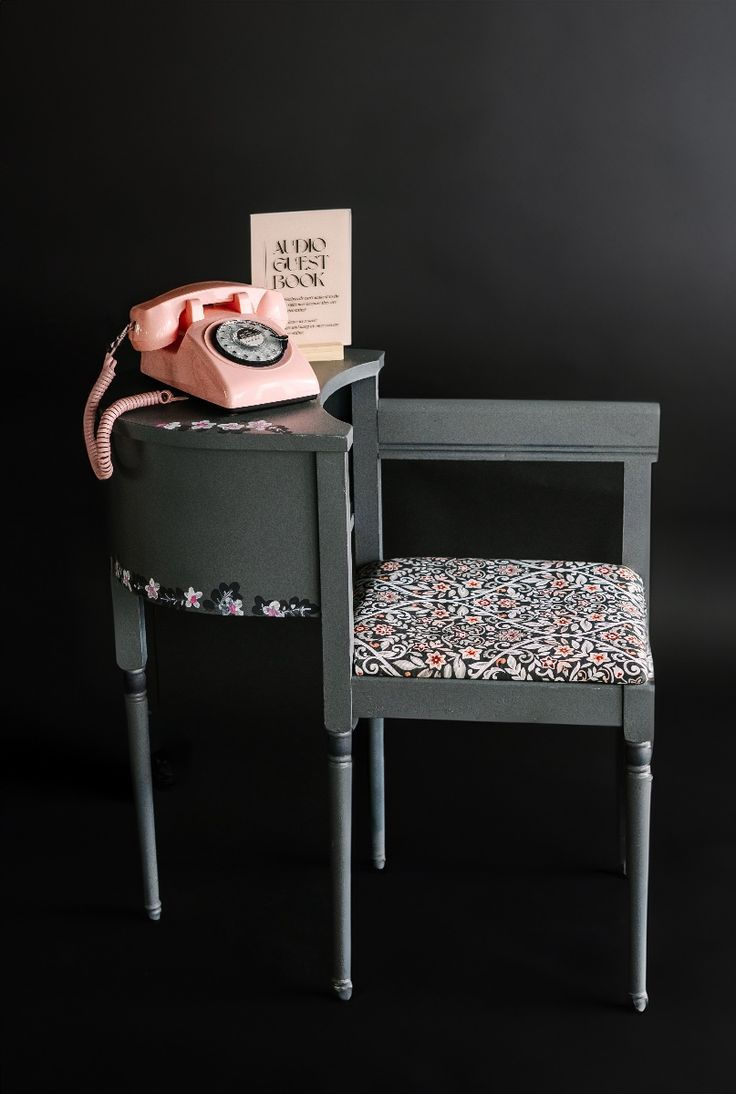
Plates on the wall. Decorative plates, arranged without strict symmetry and sourced from different origins, are the grandma chic statement wall. Country Living's feature image for their whimsy trend report, published in March 2026, showed exactly this: hand-painted plates in varying sizes arranged around an antique mirror above a skirted console table. The gossip bench beside it. The everything, considered and comfortable and thoroughly at ease with itself.
How to Bring Grandma Chic Into Your Home Without It Feeling Like a Set

The risk with any named aesthetic is that it becomes a costume rather than a home. Grandma chic at its best is the result of accumulation over time, which is not something you can buy all at once and install on a Tuesday but you can begin.
Start with one inherited or found piece. A floral armchair, a scalloped-edge cabinet or a velvet ottoman in an unexpected colour. The grandma chic interior begins with an object that has a history and earns the room around it.
Layer in rather than plan out. The grandma chic home is built through addition rather than curation. Each new object should be chosen because it pleases you, not because it coordinates. The coordination happens naturally over time.
Embrace the impractical beautiful thing. The singing bird box or a decorative plate that will never hold food. The glass paperweight that does nothing except catch the afternoon light in a way that is quietly extraordinary. Country Living noted that singing bird boxes from the 1950s and 1960s can be found for around $150. The impractical beautiful thing is the heart of the grandma chic interior.
Mix your sources. The grandma chic home does not come from one shop or one era. It comes from the antiques market, the inherited chest, the find at the back of a flea market stall, and the one new piece bought because it belonged. Mixing sources is not a styling technique. It is the philosophy.
What the Grandma Chic Trend Tells Us About Where We Are

Grandma chic does not exist in isolation. It is part of the same cultural current that produced nonnamaxxing, biophilic design, and the broader retreat from the optimised and the efficient.
The home that grandma chic describes is one where objects are chosen for meaning rather than trend alignment, where accumulation across time is read as richness rather than clutter, and where the evidence of a life actually lived is considered the highest possible form of interior decoration.
It is not a coincidence that this aesthetic is having its moment at a time when the algorithm-led interior, the perfectly coordinated, photographically flawless, emotionally neutral space, has reached a kind of exhaustion point. Grandma chic is the correction. It is the room that cannot be summarised in a grid post because it requires time to understand, and that is precisely its point.
The grandmother's home always knew something the rest of us are only now catching up to: that a space which has been loved looks different from a space which has been designed, and that the difference is legible the moment you walk through the door.