Inside the Curated Refrigerator: Why the Fridge Became the Most Honest Room in the House

Inside the curated refrigerator, where butter lives in ceramic dishes and produce is sorted by colour, is a more honest self-portrait than almost any other room in the house
By Maheshwari Vickyraj

There is a specific kind of video that has quietly become one of the most watched genres on the internet. No dialogue. No music beyond something soft and ambient. A person removing groceries from paper bags, washing produce, and placing it into glass containers with handwritten labels, building, item by item, toward a refrigerator that looks less like food storage and more like a still life.
The hashtag built around this footage has accumulated more than 1.9 billion views on TikTok. The industry has given the practice an actual name: fridgescaping, the art of decorating the inside of a refrigerator with the same intentionality once reserved for a living room shelf.
The refrigerator, for the first time in its history as a household object, has become a place people are willing to be seen.
What the Curated Refrigerator Actually Is

The aesthetic is specific enough to recognise instantly. Glass containers, never plastic, holding things that did not arrive in glass. Butter, moved from its original wrapper into a ceramic dish with a domed lid. Produce arranged by colour rather than category, a rainbow gradient running from the crisper drawer to the top shelf. A small chalkboard or printed label naming something that needs no naming, because everyone already knows what oat milk looks like.
This is not, primarily, about freshness or organisation, although both are genuine byproducts. It is about the fridge functioning as a second living room. A space that, until very recently, nobody outside the household ever saw, now treated with the same visual seriousness as the entryway console or the coffee table styling.
Home and Texture, reporting on the phenomenon dubbed the Girl Fridge, described it precisely: beyond mere food storage, the refrigerator has transformed into a canvas for self-expression, a carefully curated space that reflects personal values, aesthetics, and lifestyle choices. Unlike the stereotypical bachelor fridge, often depicted as barren save for condiments and beer, the Girl Fridge is abundant yet orderly.
Erewhon and the Aspirational Grocery Run

No single retailer has done more to shape the visual language of the curated fridge than Erewhon, the Los Angeles grocery chain whose products have become aspirational objects in their own right, independent of what they actually do.
The Erewhon haul, a specific subgenre of fridge content, follows a recognisable arc: the canvas tote, the receipt that prompts a gasp, the smoothie in a labelled glass bottle, the produce that looks improbably perfect. What gets stocked into the fridge afterward carries the visual DNA of the store itself, minimalist packaging, muted colour palettes, the sense that every item was chosen rather than simply bought.
This is the same logic running through the French pharmacy aesthetic and the broader 2026 appetite for objects with a clear point of origin. The Erewhon-stocked fridge does not need a label explaining where the kombucha came from. The bottle itself does the explaining.
What Design Magazines Are Actually Saying

The curated fridge has moved beyond TikTok into the pages of the publications that set the broader design agenda, and their coverage reveals something the platform itself rarely articulates: that this is a genuine extension of the larger 2026 interiors conversation, not an isolated food trend.
Veranda's 2026 trend forecast extended the same logic to the pantry, declaring it the year of the pretty pantry and noting that kitchen pantries are less about holding canned goods and expired spices and more about an opportunity to create a jewel box packed with design magic.
Gaia Filippi, principal designer at Gaia G Interiors, told Veranda that people have come to realise that having efficient, organised, and beautiful utilitarian spaces gives a sense of peace and order just as much as living spaces do.
House Beautiful's organising trends coverage for 2026 identified a related and important shift: organisation is increasingly being framed not as a chore but as a form of self-care.
Professional organiser Amelia Nicholas, founder of Urban Cottage NYC, told the publication that through social media, more people are getting into cooking ahead for the week, with the organisation of pantries and food storage around meal prep emerging as a crucial piece of the larger self-care picture.
Gulf News, reporting on the trend's spread to the UAE, noted that the hashtag fridgeorganisation had already passed 1.9 billion views, observing that the appeal extends well beyond aesthetics into genuinely reduced food waste and faster, easier cooking.
Why the Fridge Specifically
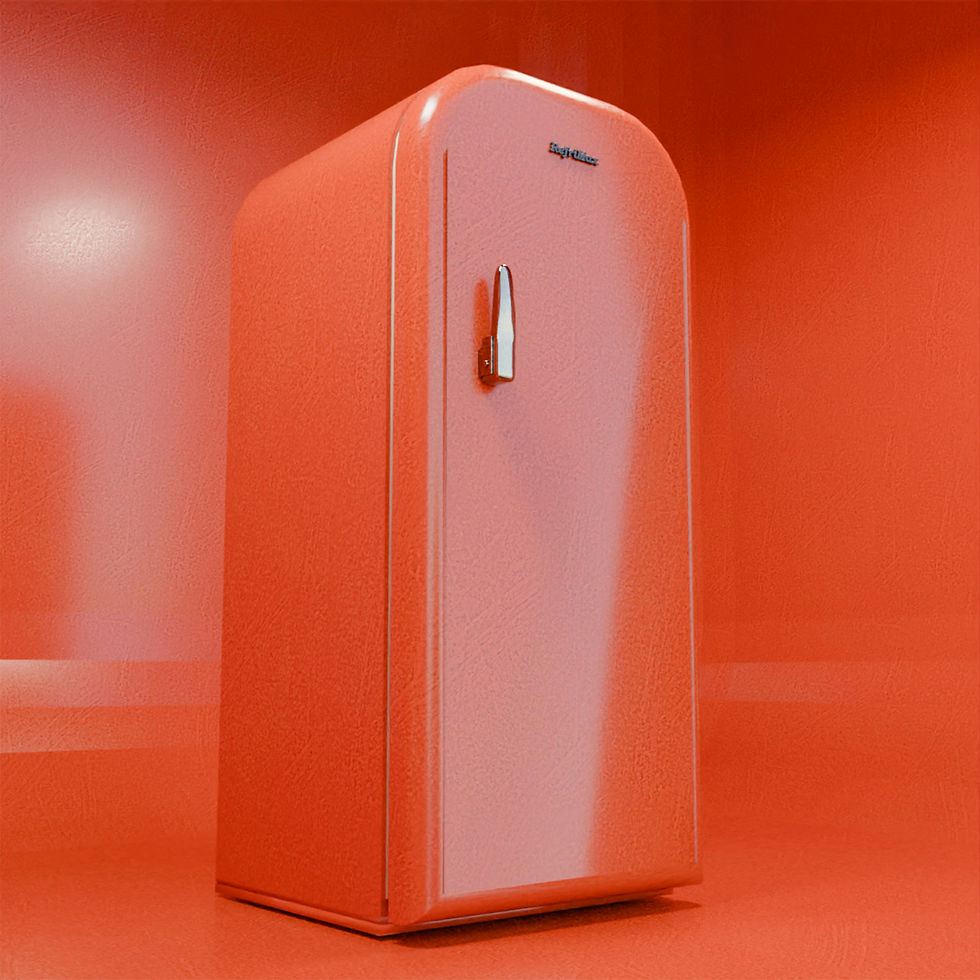
There is a reason this particular object, rather than the cupboard or the wardrobe, became the centre of this trend, and it has to do with what a refrigerator actually contains.
A fridge is one of the few spaces in a home that cannot lie about who you are. The wardrobe can be curated for an occasion. The bookshelf can be arranged to impress. The fridge, opened on an ordinary Tuesday, holds exactly what you have chosen to eat when no one was watching, which makes it, paradoxically, one of the most honest objects available for self-presentation.
This is precisely why the aesthetic matters as a cultural signal rather than simply a tidiness trend. A fridge stocked with labelled glass jars of pre-washed produce, ceramic butter dishes, and colour-coordinated shelving is not communicating that the owner eats well, necessarily. It is communicating that the owner has the time, resources, and inclination to make eating well look a particular way. The fridge has become a status object in the same register as the farmer aesthetic and the gossip bench: aspirational not because it is expensive in any obvious sense, but because of what it implies about the life surrounding it.
The Honest Critique Inside the Trend

Not every observer of the curated fridge is convinced of its innocence, and the most useful writing on the subject holds that tension directly.
A cultural critique published in early 2026 described the genre with real precision: soft lo-fi beats, rainbow-organised produce, glass containers being lovingly labelled in cursive font. It is like watching someone prepare for a Pinterest apocalypse. The same piece noted that while the trend makes climate-conscious, low-waste living feel more accessible, it also risks becoming another curated, performative lifestyle flex, observing that true impact comes from small, imperfect steps rather than how perfect a fridge looks on camera.
The genuinely good instinct, eating fresh, reducing waste, organising a home with care, becomes entangled with its own performance the moment it is filmed for an audience. The curated fridge is not dishonest for existing inside this tension. It is simply the latest and most literal example of it.
What the Curated Refrigerator Actually Reveals

Strip away the glass jars and the cursive labels, and the curated refrigerator trend is pointing at something genuinely interesting about where domestic identity now lives.
For most of the twentieth century, the rooms that communicated taste and status were the ones designed to be seen: the living room, the dining room, the entryway. The fridge belonged to the private, unglamorous infrastructure of a home, alongside the laundry cupboard and the under-sink storage. Its sudden elevation into a space worth styling says something about how thoroughly the boundary between private and public domestic life has dissolved, and how completely the instinct to curate has spread into every corner it can reach.
It also says something more specific and slightly more hopeful: that food, finally, is being treated with the same visual respect as the rest of the home. The seasonal produce display, the butter moved into something better than its packaging, the herbs kept upright in water rather than wilting in a drawer: these are small acts of attention that predate social media by centuries, even if the audience for them did not.
From the Sound Archive
Because every aesthetic has a soundtrack.
Some of life’s most beautiful rituals happen behind an ordinary door: the soft hum of the refrigerator, the first coffee of the morning, herbs standing in water, ripe fruit waiting in a ceramic bowl, and butter slowly coming to room temperature.
Sunday Groceries is the listening companion to this feature, bringing together feel-good pop, indie favourites, soft soul, and café classics that celebrate the quiet optimism of grocery flowers, thoughtfully stocked shelves, and kitchens that are lived in rather than perfectly styled.
Press play, linger over breakfast, rearrange the flowers, and discover the gentle luxury of finding beauty in the everyday.