What Is Grocery Store Tourism? Inside the Travel Trend Everyone Is Talking About

The most revealing place in a city might not be its museum, monument, or landmark. Increasingly, travellers are finding that the supermarket aisle offers a more intimate portrait of local life than any guidebook ever could.
By Maheshwari Vickyraj

The Louvre raised its entry ticket by 45% for non-European visitors in January 2026, confirmed by CNN. The queue, on most days, still runs to two hours. The Mona Lisa, when you finally reach her, is smaller than you expected and further away than feels quite right, behind a roped perimeter, behind a crowd of phones.
Meanwhile, three minutes from the Pyramide du Louvre, a Monoprix is open. No reservation required. The cheese aisle alone will tell you more about how the French actually live than a morning spent in any gallery.
This is the premise of grocery store tourism. And in 2026, it has become one of the most talked-about travel trends in the world.
What Is Grocery Store Tourism?

Grocery store tourism, also referred to as supermarket tourism, is the practice of deliberately visiting local supermarkets, food markets, and corner shops as a meaningful part of the travel experience rather than a practical errand.
It is not accidental that travellers who practise grocery store tourism are choosing the supermarket with the same intentionality they might choose a gallery or a restaurant. They arrive curious and stay longer than they planned. They leave with something they could not have found at home and a sharper understanding of how the people who live in this city actually eat, spend, and choose.

Hilton's 2026 trends report found that 77% of travellers enjoy exploring local grocery stores for authentic food and drink offerings. According to Expedia Group's Unpack 25 report, 39% of tourists already visit supermarkets when travelling abroad, and 44% specifically look for unique local products not available at home.
Architectural Digest contributor Kieron Marchese, whose piece for AD Middle East brought the trend to wider attention, described the experience in terms that cut to the heart of it: travellers are skipping restaurants in favour of supermarket aisles to experience local food culture up close. Shelves of hyper-specific snacks, regional drinks, and everyday staples offer a kind of unfiltered insight that even the best restaurant cannot quite replicate.
Why Grocery Store Tourism Is Rising Now

The timing is not accidental, several forces have converged in 2026 to make the supermarket a genuinely compelling travel destination.
Rising entry fees at iconic sites, like the Louvre's 45% hike for non-Europeans followed by the two-hour queue to get in, have pushed budget-conscious explorers towards free or low-cost alternatives. Supermarkets act as cultural microcosms, offering unfiltered glimpses into local lifestyles without the tourist traps.
There is also the Airbnb effect, the explosion of short-term lets with kitchenettes has changed the arithmetic of eating abroad. When you have a kitchen, the supermarket becomes an invitation rather than a necessity. You are not buying ingredients out of budget constraint. You are choosing to cook a local meal in a temporary home because the experience of doing so, the choosing, the handling, the smelling, is itself a form of cultural participation.
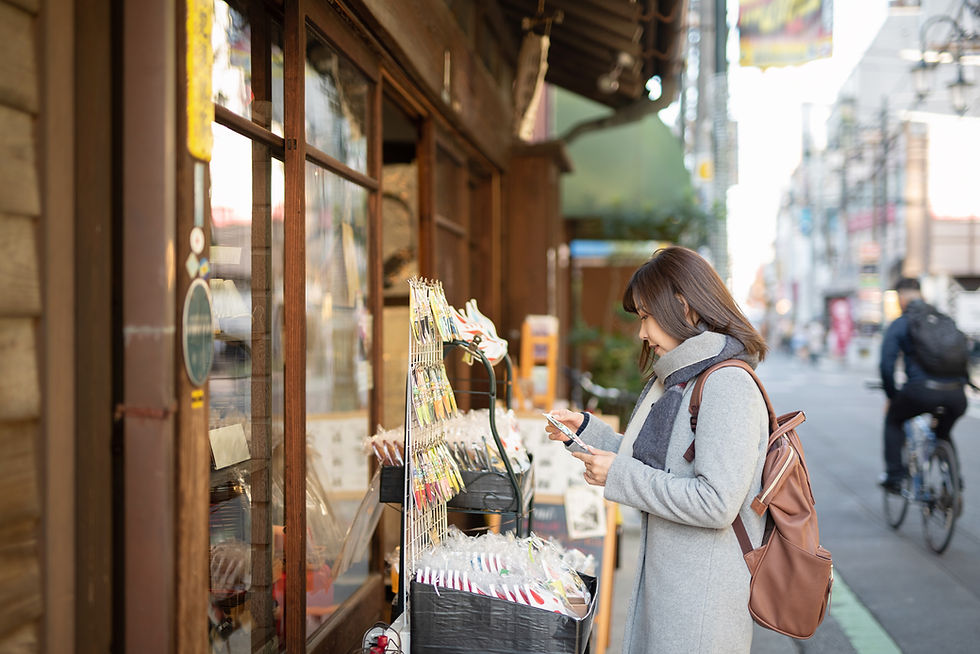
And then there is social media, which has made the supermarket aisle genuinely visual. Japanese 7-Eleven hauls. Spanish Mercadona finds. The Turkish lokum shelf. The Finnish salmiakki section. From TikTok to Instagram to travel blogs, grocery store tourism has quietly become one of the most fascinating travel trends of the decade. What started as a curiosity has quietly become a global travel trend, and it is changing how people experience destinations.
What Grocery Store Tourism Is Really About

The deeper argument for grocery store tourism is not about saving money on entry fees or finding affordable snacks. It is about a fundamental shift in what travellers are seeking from the places they visit.
After years of over-tourism and influencer overload, people crave real life. A supermarket shows how locals actually live, what they eat, how much they spend, what they value. You do not need tickets, reservations, or planning.
The supermarket does not perform for you. It does not have an audio guide or a gift shop at the exit or a suggested route. It is simply open, and it is doing what it does every day regardless of whether you are there. That quality, of being genuinely indifferent to your arrival, is precisely what makes it feel more honest than almost any curated tourist experience.

Modern travellers increasingly seek participatory cultural experiences rather than passive sightseeing alone. Grocery stores naturally fit this shift because they combine food culture, regional identity, sensory exploration, and community storytelling within one accessible environment.
This connects grocery store tourism directly to the slow travel movement, to the preference for doorbell-friend style encounters with a place rather than its highlights reel. It is the same instinct that drives the interest in soft socializing and nonnamaxxing: the search for what is real over what is staged.
The Stores Worth Making a Trip For

Not all supermarkets offer the same cultural weight. These are the ones that have earned a genuine place on the itinerary.
Fortnum and Mason, London. Founded in 1707 and holding Royal Warrants from the British royal family, Fortnum and Mason is a luxury grocery store housed across multiple floors, with a staircase grand enough to belong in a hotel. The tea section alone repays an hour. As Vogue Adria noted in their January 2026 grocery store tourism feature, the store's exceptional teas come in special packaging in a section dedicated to every possible variety.
Eataly, multiple cities. The Italian food emporium, with locations in Milan, Rome, New York, Tokyo, and elsewhere, is grocery store tourism in its most curated form: an entire building given over to regional Italian food, with restaurants, counters, and producers embedded throughout. The difference between buying pasta in an Eataly and buying pasta anywhere else is the difference between understanding where something comes from and simply consuming it.
Mercadona, Spain. The Spanish supermarket that has developed a cult following among British holidaymakers. Its own-brand products, particularly in olive oil, charcuterie, and bakery, are genuinely exceptional for the price. The Facebook groups dedicated to Mercadona finds are, at this point, a cultural phenomenon in their own right.
Japanese convenience stores. The 7-Eleven, FamilyMart, and Lawson chains in Japan are not comparable to their Western equivalents in any meaningful way. They sell fresh onigiri made that morning, multi-course bento boxes, hot foods cooked on the premises, and seasonal limited-edition products that change weekly. Visiting a Japanese konbini is a complete and genuinely pleasurable meal experience that requires no planning and costs almost nothing.
Whole Foods, United States. For international visitors, the American premium supermarket is a cultural document. The scale of the supplement aisle. The prepared foods section large enough to qualify as a restaurant. The particular vocabulary of the label copy. It says something about what American wellness culture values and what it is willing to spend on those values that is immediately legible and impossible to access from the outside.
How to Do Grocery Store Tourism Well

The difference between a great grocery store tourism experience and simply buying snacks on the way to the hotel is attention.
Go without a list. The list closes down the experience. The point is to walk slowly, pick up what is unfamiliar, read labels even when you cannot fully understand them, ask the person next to you what they are reaching for and why.
Go at the time locals shop. The late afternoon supermarket in Italy is a different experience from the tourist-hour supermarket in the same building. The people there at six in the evening are cooking dinner. Their choices are useful information.
Buy something you do not recognise. The object of grocery store tourism is not to confirm what you already know about a place. It is to discover what you did not know. The unfamiliar product, the regional snack with no English translation on the label, the cheese nobody outside this region has thought to export: these are the finds that justify the trip down the aisle.
And take your time. The supermarket, unlike the monument, is not going anywhere. It opens tomorrow at the same time. But you, in this city, will not be.

