The Rise of the Multigenerational Wellness Traveller: Why Families Are Choosing Health Over Holidays

Updated: May 15
A new kind of family holiday is emerging not around excess, but around longevity, connection, and collective wellbeing.
By Maheshwari Vickyraj

What Is Multigenerational Wellness Travel and Why Is It Growing?
Something is shifting in how families choose to travel. The all-inclusive resort with a kids' club on one side and a bar on the other is no longer the ambition. In its place, a different kind of trip is emerging: one where the grandmother joins the yoga class, the teenager does the cold plunge, and the parents book a metabolic assessment alongside the excursions. This is multigenerational wellness travel, and it is one of the most significant shifts in global tourism right now.
The concept is simple. Multigenerational wellness travel brings extended families, typically spanning at least three generations, to destinations built not around entertainment alone but around shared health, longevity, and reconnection. The logic is that when wellness is the frame, every member of the family finds something that serves them, and those experiences can be done together rather than separately.
The numbers behind it are striking. According to Squaremouth, 47% of travellers opted for multigenerational or family trips in 2025, surpassing all other types of group travel and up 17% over 2024. The Family Travel Association's 2025 US Family Travel Survey found that 57% of parents are now planning trips that include both grandparents and children. And a Virtuoso and Globetrender report noted that in 2025, seven generations are travelling simultaneously for the first time in recorded history.
The Two Trends Colliding: Multigenerational Travel Meets Longevity Tourism

Multigenerational wellness travel sits at the convergence of two forces that have been building independently and are now intersecting with considerable momentum.
The first is the surge in family and multigenerational travel, driven in part by a post-pandemic recalibration around time and togetherness.
According to Booking.com's travel research, almost half of travellers would rather spend their money on a once-in-a-lifetime trip than leave an inheritance. This shift is especially prominent among baby boomers, 49% of whom expressed this preference, with younger family members increasingly benefitting as grandparents fund shared experiences rather than financial legacies.

The second force is the longevity wellness industry, which UBS estimates will reach $8 trillion by 2030. A McKinsey report found that 70% of consumers in the US and UK, and 85% in China, have purchased a product or service related to healthy ageing in the past year. Younger generations are also embracing preventative health, seeking to invest in longevity before issues arise rather than after.
When these two trends meet, you get multigenerational wellness travel: the family holiday reimagined as a shared investment in collective health.
Why the Timing Makes Sense: The Demographics of Now

The scale of what is driving this shift is worth sitting with.
By the end of this decade, the number of people aged 60 and older will grow by 56% to 1.4 billion, according to the World Health Organisation. This is the generation that does not want to age the way their parents did.
As Alejandro Battaler, Vice President of SHA Wellness Clinic, told Robb Report: "Seventy-five percent of our clientele already look pretty fit and healthy." The average Sha client, he noted, is just 47 years old, and they are there to work on health goals, not to recover from illness.
One quarter of all leisure travellers are already grandparents, and according to travel trend data, 37% of their trips are multigenerational. The 2025 Family Travel Association survey found that 75% of grandparents said family travel was a great way to bond with grandchildren through multigenerational trips, rising to 82% for skip-generation trips, where grandparents travel directly with grandchildren without the parents.
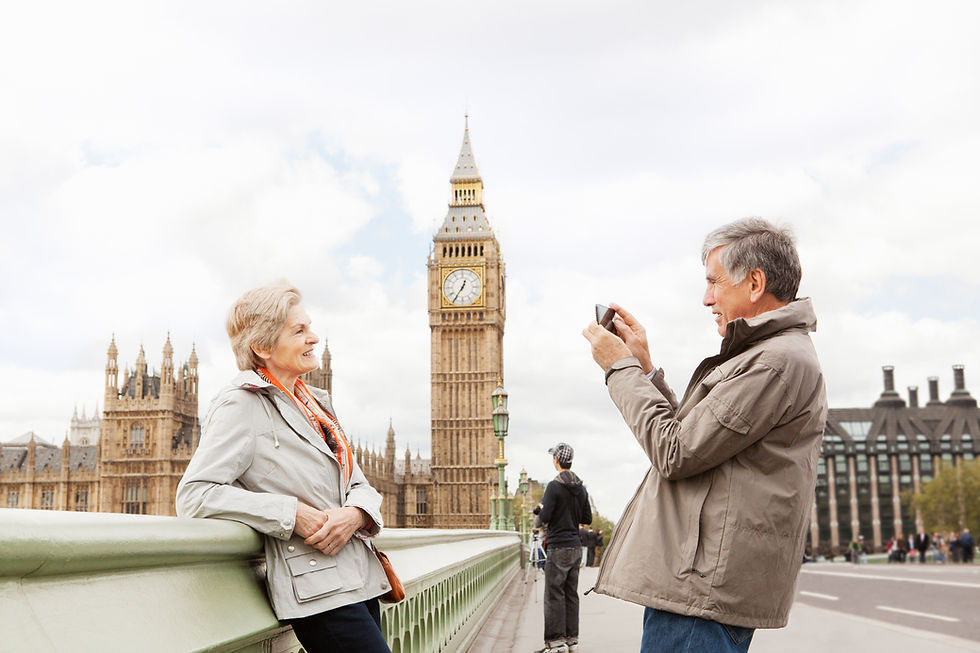
Meanwhile, Jack Ezon, founder of luxury travel advisors Embark Beyond, told Forbes: "Multigenerational travel is still the biggest growth area for us, and has been consistently growing for years. Multigen experiences now account for 32% of our transactions and 43% of our overall revenue."
The demographic pressure and the commercial reality are pointing in the same direction.
From Individual Optimisation to Shared Wellbeing

Perhaps the most significant cultural shift embedded in multigenerational wellness travel is the one from individual to collective.
For the past decade, wellness travel has been primarily framed as a solo pursuit. The solo retreat. The personal reset. The individual health audit. These remain valid and valuable. But there is a growing recognition, mirrored in the broader cultural conversation around doorbell friendships, nonnamaxxing, and the limits of self-optimisation, that health is not only a personal project. It is a social one.
As Healing Holidays noted in their 2026 wellness forecast, multi-generational family wellness retreats are surging precisely because families are choosing experiences that support health, connection, and longevity across every age group, not just the individual.
This reframing is significant. Travel, in this model, is no longer a reward to be consumed but an investment to be shared. The family that does the morning walk together, takes a cooking class with local seasonal ingredients, or sits in a sound bath in the same room is not just making memories. They are building shared health capital across generations.
What Multigenerational Wellness Travel Actually Looks Like

The category is broader than any single format. Here is how it is materialising across different types of destinations and experiences.
Longevity Resorts With Multi-Age Programming
Properties like Six Senses Ibiza, Canyon Ranch in Tucson, and SHA Wellness Clinic in Spain are increasingly designing programmes that accommodate guests from their twenties to their seventies simultaneously. Six Senses Ibiza's RoseBar longevity club, for instance, tests biomarkers to deliver personalised lifestyle, nutrition, and exercise advice. These are not activities designed for a single demographic. They are frameworks that different generations can move through at their own pace and intensity, creating parallel but connected wellness experiences.
Canyon Ranch's Longevity8 programme, a four-day retreat in Tucson starting at $20,000, includes physician consultations, over 200 biomarker assessments, sleep screenings, endurance testing, and personalised action plans. The appeal for a multigenerational group is clear: a grandmother, a daughter in her forties, and a granddaughter in her twenties could all come away with genuinely different but equally relevant insights from the same stay.
Nature-Led Experiences Across Age Groups
The most accessible form of multigenerational wellness travel does not require a medical spa. A family hiking trip in the Dolomites, a coastal walking holiday in Portugal, or a stay at an agritourism property in Tuscany with farm-to-table cooking can serve every generation simultaneously. The shared rhythm of being outdoors, eating well, and moving without performance targets is, as the nonnamaxxing conversation has established, among the most evidence-backed forms of health maintenance available.
The appeal here is democratic. These are not trips that require physical extremity or significant budget. They require intention.
Blue Zone Destination Travel
There is a growing market for travel specifically to Blue Zone regions, those areas of the world where longevity is statistically exceptional, including Sardinia, Okinawa, Ikaria in Greece, and the Nicoya Peninsula in Costa Rica. The interest is not merely touristic. Families travelling to these regions with awareness of their longevity research are, in effect, immersing themselves in the living evidence that daily rhythm, community, seasonal food, and incidental movement can sustain health across an entire lifetime. The multigenerational dimension adds resonance: being in Sardinia with your grandmother, who may be living the habits the wellness industry is only now catching up to, is a different kind of education.
What to Look for When Planning a Multigenerational Wellness Trip

Not every wellness property is built for multiple generations, and the mismatch can be costly. Here is what to evaluate before booking.
Programming flexibility. The best multigenerational wellness destinations offer modular experiences rather than fixed schedules. Look for properties where a grandparent can join a gentle morning movement class while a teenager does something more vigorous, and where the family can reconvene for meals and shared experiences without either having to compromise their day.
Age-inclusive activity design. Walking trails with multiple difficulty levels, pools with varying temperatures, spa treatments adaptable by intensity, and dining menus that accommodate different nutritional needs are all signals that a property has genuinely considered the multigenerational guest rather than simply accepting them.
Shared anchor experiences. The most successful multigenerational wellness trips tend to have two or three experiences that bring everyone into the same space at the same time, a sunset meditation, a family cooking class, a group hike at the beginning or end of the day. These moments are where the cross-generational connection actually happens, and they should be designed rather than left to chance.
Proximity to nature. Research consistently shows that time in natural environments reduces cortisol, lowers blood pressure, and improves mood across all age groups. Properties set in mountains, coastal landscapes, or forest environments are inherently more conducive to the multigenerational wellness goal than urban spa hotels, however well-appointed those may be.
The Deeper Shift: What Multigenerational Wellness Travel Is Really About

At its most considered, multigenerational wellness travel is a response to something that the public health conversation has been noting with increasing urgency: that longevity is not built alone.
The families most likely to thrive across generations are not the ones with the best individual supplement stacks or the most optimised morning routines. They are the ones with strong social bonds, shared rituals, regular movement in natural environments, food made and eaten together, and the kind of easeful presence that cannot be scheduled but can be cultivated.
The holiday that centres these things is not merely a leisure choice. It is, in the language of the longevity researchers who study Blue Zones and the scientists who study the impact of connection on health, a serious investment in collective wellbeing.
The multigenerational wellness traveller understands something that solo wellness culture has been slower to reach: that to be well together is not a compromise on individual health goals. It is, quite possibly, the most effective route to all of them.

