Cortisol Dressing Is In: Why Fashion Is Moving from Dopamine to Calm

Updated: May 15
A softer wardrobe for a sharper world where palette, texture, and silhouette are curated not to impress, but to soothe the nervous system.
By Maheshwari Vickyraj

What Is Cortisol Dressing? The Fashion Trend Rewriting How We Get Dressed
Cortisol dressing is the emerging fashion philosophy built around one simple premise: that what you wear can raise or lower your stress levels. Where dopamine dressing was about wearing colour to manufacture joy, cortisol dressing is about building a wardrobe that actively reduces nervous system activation. Quieter. Softer. Easier on the eye and the body.
Byrdie, one of the leading beauty and fashion platforms in the US, framed it precisely: dopamine dressing is out, and cortisol dressing is in. The girls, as they put it, are investing in cortisol closets.
The name comes from cortisol, the hormone your body produces in response to stress. It is not inherently bad. As Vogue noted, cortisol is a necessary mechanism of survival. But in excess, driven by overstimulation, relentless productivity culture, and digital overload, elevated cortisol becomes the thing eroding your sleep, your skin, and your mood.
Fashion is now responding to that reality. And the response looks like butter yellow, dusty blue, oatmeal beige, washed grey, and soft pink.
Why Cortisol Dressing Is the Fashion Mood of Right Now

To understand cortisol dressing, you first need to understand what it is replacing.
Dopamine dressing had its moment. It made complete sense for where we collectively were: emerging from the pandemic, craving colour, craving celebration. Wearing something bright was a small act of defiance against two years of grey. Brands embraced it while social media ran with it.
But something shifted.
The wellness conversation that took hold across 2024 and 2025 was not about optimisation or performance. It was about nervous system regulation. As The Week reported in September 2025, warnings about cortisol had effectively hijacked social media, with concerns about cortisol face, cortisol belly, and the toll of chronic stress becoming mainstream conversation. People were not just talking about managing their stress. They were building their entire lifestyle around reducing it.
Fashion, which has always been a mirror held up to the cultural moment, followed.
Cortisol dressing is, in that sense, less a trend and more a reckoning. It is what happens when the person who was dopamine dressing three years ago has burned out and is now reaching, instinctively, for the softest, quietest, least demanding thing in the wardrobe.
The Cortisol Closet: What It Looks Like and Why It Works

The cortisol closet is not a capsule wardrobe. It is not minimalism for minimalism's sake. It is an intentional edit toward pieces that do not compete for your attention, that do not require effort to process, and that create a visual and tactile sense of ease.
Colour psychology has long held that highly saturated tones, particularly reds and bright oranges, activate alertness and urgency. Muted, desaturated tones do the opposite.
Design research cited by style platform Rue Sophie confirms that low-saturation hues reduce visual strain and create lasting comfort, functioning almost like a chromatic exhale in both the home and the wardrobe.
That is the science at the foundation of cortisol dressing.
The Cortisol Dressing Colour Palette
Butter yellow: Warm, low-contrast, and softly luminous. It has the approachability of cream with just enough warmth to feel alive. On the spring runways and in Byrdie's cortisol carousel, it appeared in knits, linen, and loose satin as a foundational neutral for the cortisol closet.

Dusty blue: The kind of blue that recalls faded denim, overcast skies, and well-worn chambray. Not sharp, not icy. It is the visual equivalent of a long exhale. Byrdie highlighted dusty blue specifically as a cortisol dressing tone, appearing across soft tailoring, satin shirts, and easy-wear separates.

Oatmeal beige: Perhaps the most cortisol of all the cortisol colours. It requires no decision. It demands nothing. Linen in this shade, or ruched cotton, or a silk slip, reads as effortless in a way that asks nothing from the wearer or the observer.
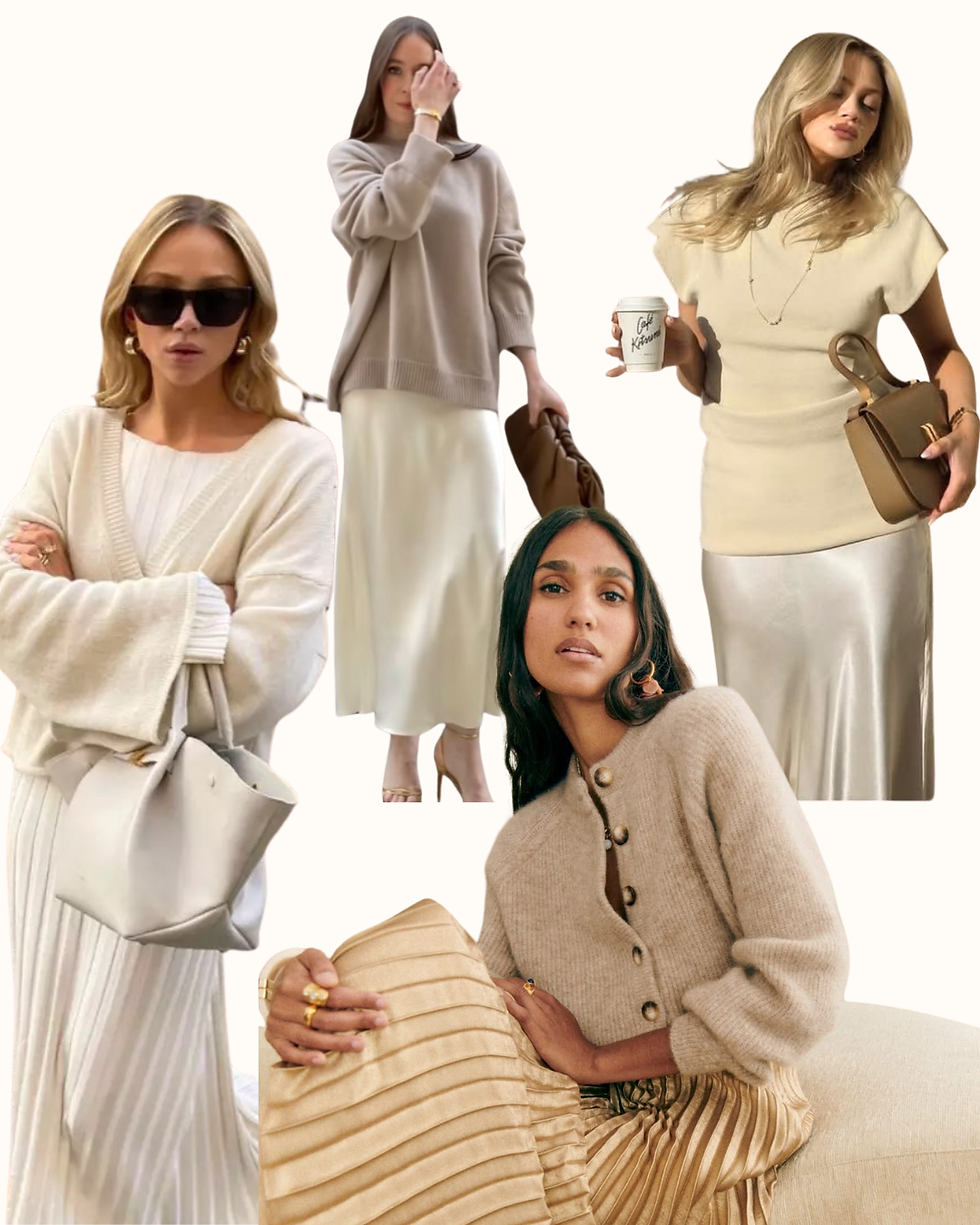
Washed grey: Softer than charcoal, cooler than taupe. Washed grey carries the quiet authority of something that has been worn and loved rather than something bought new. In cortisol dressing terms, it is the anti-power suit.

How to Build a Cortisol Closet: A Practical Guide

Cortisol dressing is not about starting over. It is about editing with a specific question in mind: does this piece create ease or friction?
Start With Fabric, Not Colour
Cortisol dressing lives in the body as much as it reads to the eye. The tactile experience of getting dressed matters. Reach for natural fibres: linen, cotton, washed silk, cashmere, soft jersey. Avoid anything that itches, pulls, constricts, or requires adjustment throughout the day. The nervous system registers physical discomfort as low-grade stress. Cortisol dressing removes that signal entirely.
Choose Silhouettes That Move With You
Cortisol dressing gravitates toward ease of movement: wide-leg trousers, loose blouses, soft tailoring without rigidity, slip dresses that require nothing of the body. This is not shapelessness. It is comfort that has been thought through. Think Toteme, The Row, and COS at the higher end. Think loose linen at any budget. The through-line is that the clothes should not feel like effort to wear.
Edit Toward the Muted
You do not need to remove everything saturated from your wardrobe. Cortisol dressing is not a colour ban. It is a recalibration. Ask yourself which pieces you reach for when you are tired, anxious, or simply want to feel like yourself without trying. Those are your cortisol pieces. Build from there.
Invest in One Elevated Neutral
The cortisol closet benefits from at least one piece of real quality in a neutral tone. A good linen trouser, a cashmere knit in oatmeal, a well-cut grey blazer that has been slightly softened. This is the piece that anchors the wardrobe and signals, to yourself as much as anyone else, that ease and quality are not mutually exclusive.
Resist the Urge to Complete an Outfit
One of the most cortisol-reducing things you can do is stop overworking a look. Cortisol dressing often lands on something that looks almost unfinished by the standards of dopamine dressing. A soft trouser with a plain shirt. A slip dress worn flat with minimal jewellery. The absence of the finishing layer is, in this case, the point.
Cortisol Dressing vs Quiet Luxury: What Is the Difference?

These two aesthetics are related but not identical, and the distinction is worth understanding.
Quiet luxury, which reached peak cultural saturation through 2023 and 2024, is fundamentally about class signalling. Its neutrals are intentional not just for the sake of calm, but because they communicate a particular kind of taste and affluence. The Row, Loro Piana, old-money references: these are the touchstones.
Cortisol dressing is less interested in status and more interested in nervous system regulation. It is not asking you to spend more, or to signal anything. It is asking whether this piece makes you feel settled or unsettled when you put it on. The cortisol closet might contain vintage finds and high street linen alongside one considered investment piece. The criterion is how it feels, not what it costs.
As FAB L'Style observed in their 2025 breakdown of the quiet luxury and dopamine dressing tension, consumers are smarter now. They dress based on emotion, not just trends. Cortisol dressing is where that emotional intelligence takes its most conscious form.
What Cortisol Dressing Says About the Cultural Moment

Fashion does not exist outside the culture that produces it. Cortisol dressing is not simply a preference for softer colours. It is a direct response to a specific kind of exhaustion.
Vogue Scandinavia, in their 2025 wellness retrospective, noted that the wellness conversation had shifted decisively away from performance and optimisation toward nervous system regulation, rest, and sustained wellbeing. The language of cortisol, which had migrated from health platforms to beauty to lifestyle, had by 2025 embedded itself in the way people thought about their daily choices, including what they wore.
Cortisol dressing arrives at the intersection of that conversation and a broader fatigue with the demands of visual culture. The dopamine scroll, the dopamine wardrobe, the dopamine lifestyle: all of it asks something of you. Cortisol dressing asks very little. That is, right now, a form of luxury.
How to Wear Cortisol Dressing Without Losing Your Identity

The risk with any trend conversation is that it flattens into a single look. Cortisol dressing is not a uniform. It is a sensibility.
You can wear cortisol dressing with a bold accessory, a single statement earring, a bag in a deeper tone that grounds the outfit without competing for attention. You can wear it in a city or on a Sunday. You can arrive at cortisol dressing from quiet luxury, from slow fashion, from post-burnout simplification, or from simply noticing that the days you reach for the linen shirt are the days you feel most like yourself.
The cortisol closet does not demand that you abandon colour, personality, or self-expression. It simply invites you to ask a more considered question before you get dressed each morning: how do I want to feel today, and what am I actually reaching for?
If the answer is softer, easier, quieter, you already know where your cortisol wardrobe begins.

